

You can have a budget that balances perfectly on paper and still run out of money three days before payday.
How does that happen?
You made a budget. You paid attention to your bills. You even cut back on a few things. But now you’re checking your bank account and wondering how you’re going to cover groceries until your next paycheck.
Here’s what many budgets don’t show you: having enough money for the month doesn’t necessarily mean having enough money when you need it.
And sometimes the problem isn’t just timing. It could be spending that doesn’t match your estimates, expenses you’ve overlooked, or income that simply isn’t covering your household’s needs.
Let’s look at six reasons this happens and what you can do about each one.
1. Your Bills Arrive Before Your Paycheck Does
You can have enough income over a month and still be short on a particular Wednesday.
Suppose you have $350 available. A $500 bill is due Wednesday, and your paycheck arrives Friday.
You’re short $150 when the bill is due, even if Friday’s deposit makes the month look comfortable.
That’s a cash-flow problem: the dates don’t line up.
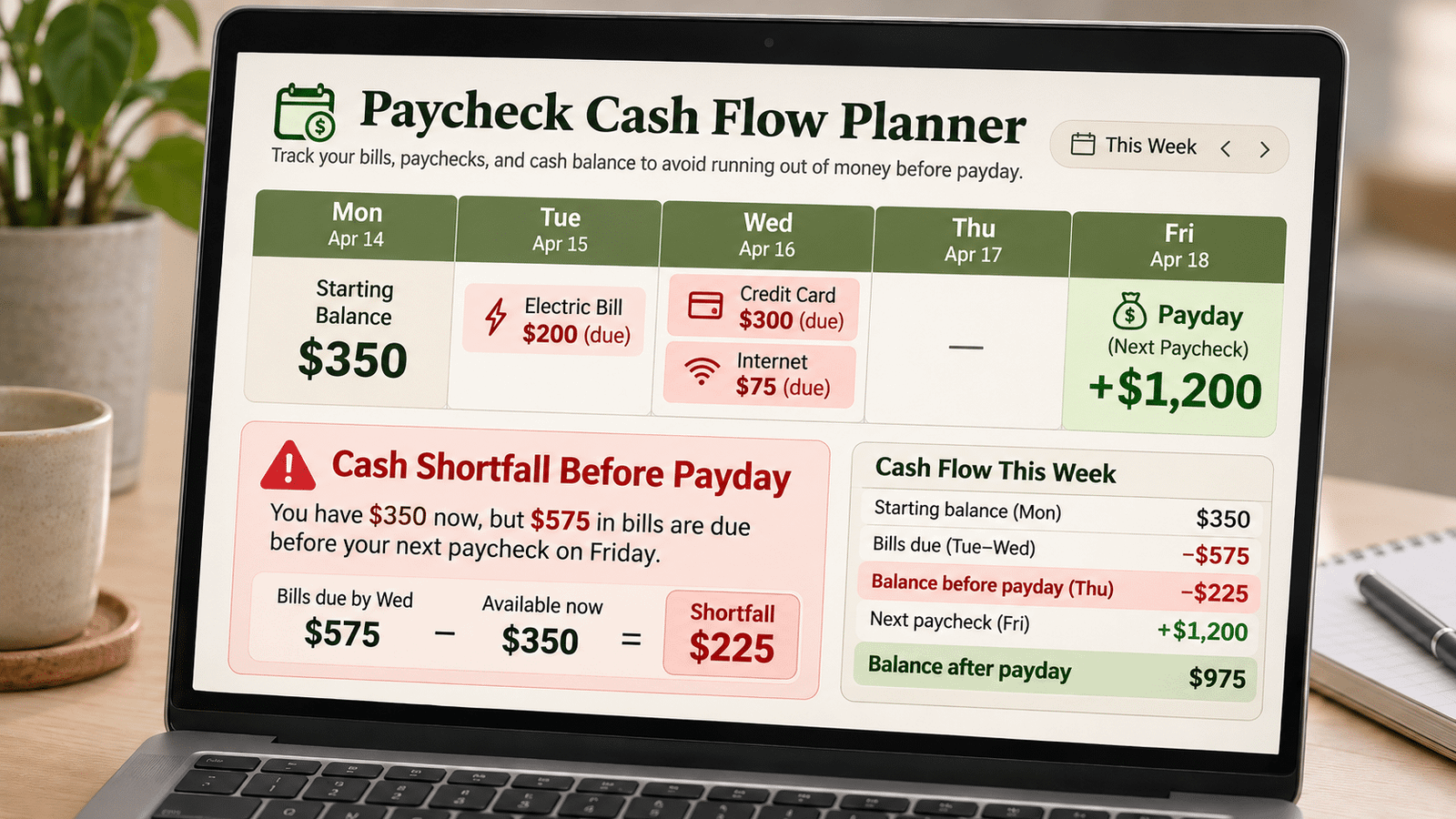
The Consumer Financial Protection Bureau recommends putting income and expenses on a calendar so you can see those gaps and look for ways to adjust them. [1]
What to do
Write down your next two paydays and every payment that needs to happen before each one. Include automatic withdrawals and the money you’ll need for food, transportation, and medication.
Use the date the money needs to leave your account, not just the due date printed on the bill.
If several bills fall before payday, ask a provider whether you can move a due date or split a payment. Ask about fees, the first payment under the new arrangement, and when the change takes effect.
Keep following the current agreement until the provider confirms otherwise.
Moving a due date can help with timing. It won’t reduce the total you owe or solve a budget that costs more than you earn.
2. Your Budget Uses What You Hope to Spend
There’s nothing wrong with wanting a lower grocery bill.
But writing down $400 doesn’t make a household’s actual $550 grocery spending disappear.
If you budget the lower amount without a workable plan to change what you buy, the missing $150 has to come from somewhere.
The same thing happens with gas, school expenses, household supplies, and eating out.
What to do
Review the last two or three months of bank and credit card statements. Look at what you actually spent before deciding what you want to spend next.
Include purchases made by everyone whose spending comes from the household budget.
Then choose specific changes you can realistically make.
“We’ll spend less on food” is hard to follow. “We’ll plan dinners before shopping and replace one takeout order this week” gives you something to do.
You may still decide to keep a purchase because it matters to your family. The point isn’t to label everything unnecessary. It’s to make sure your budget reflects your choices.
3. Expenses That Don’t Happen Monthly Keep Being Left Out
Car registration. School fees. An annual subscription. A holiday you knew was coming.
They aren’t monthly bills, but they still need money.
If your budget only includes expenses that arrive every month, these costs can keep pushing you back onto a credit card.
What to do
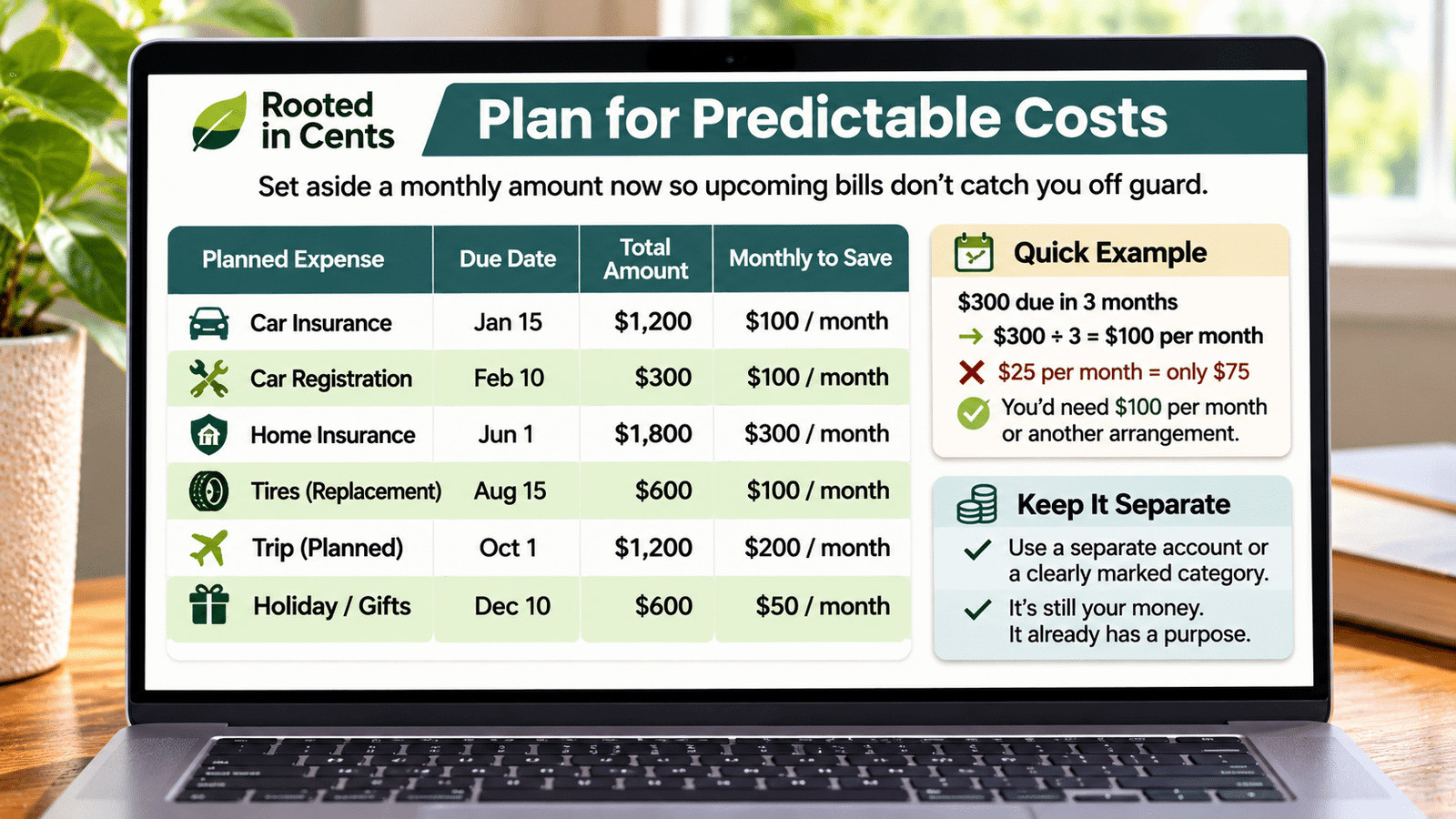
Make a list of predictable costs coming up over the next year. Add their due dates and estimated amounts.
For an expense a full year away, dividing the amount by twelve gives you a monthly starting point.
For something due sooner, use the time you actually have.
If a $300 bill is due in three months and nothing is saved, setting aside $25 a month won’t get you there. You’d need $100 a month, or another arrangement if that isn’t affordable.
Keep money for these planned bills separate from money available for everyday spending, whether you use a separate account or a clearly marked category.
The money is still yours. It already has a purpose.
4. Your Account Balance Looks Like Spending Money
Seeing $700 in checking can feel reassuring.
But if $450 is needed for upcoming payments and $150 is needed for groceries and transportation before payday, you don’t have $700 available for something else.
You have $100 left after those needs.
Your account balance doesn’t explain all the promises you’ve already made with that money.
What to do
Before making an unplanned purchase, check:
- What payments still need to clear?
- What automatic withdrawals happen before the next deposit?
- What will we need for food, gas, medicine, and other essentials?
- Is any of this balance reserved for a future bill?
Review pending activity and your own payment records so you don’t subtract a transaction twice or forget one that hasn’t appeared yet.
Think of the amount left after those commitments as your starting point for a spending decision, not the entire bank balance.
5. You’re Budgeting From Income You Can’t Count On Yet
Overtime, commissions, gig work, and changing hours can make budgeting difficult.
A strong month can encourage you to take on expenses that a quieter month won’t cover.
Even a steady biweekly paycheck can cause confusion. Getting paid every two weeks isn’t the same as getting paid twice a month. Most biweekly pay calendars have twenty-six paydays, which means some months have a third paycheck.
An annual monthly average may include money that won’t arrive in a typical two-paycheck month.
What to do
Build the next pay period’s plan around income you reasonably expect to receive on its actual expected date.
For variable income, review several months, including lower months. Don’t make your best month responsible for paying every month’s bills.
If you do gig work, account for business costs and an appropriate tax reserve before treating the receipts as household spending money.
When extra income arrives, decide what it needs to cover before spending it. Upcoming bills or a small cushion may need it first.
Conservative planning can’t guarantee future income. It can help you see sooner when your regular commitments depend on unusually good results.
6. Your Regular Expenses Really Are Higher Than Your Income
Sometimes you haven’t missed a category or made a timing mistake.
Sometimes rent, food, utilities, transportation, care costs, and debt payments simply add up to more than the money coming in.
That’s not something a prettier budget can fix.
And telling someone to cancel one small subscription isn’t a serious answer to a much larger shortage.
What to do
Add up your realistic expenses and compare them with dependable take-home income.
If there’s an ongoing gap, name the amount. Knowing you’re short about $250 a month gives you a clearer problem to address than feeling like you’re failing every week.
Look at the largest realistic opportunities: assistance you may qualify for, hardship arrangements, insurance or service options, changes to major costs, or additional income that’s feasible for your household.
If you can’t pay everything, don’t simply pay whichever company contacts you most often.
The CFPB’s bill-prioritizing guidance recommends considering the consequences of missed payments, including risks to housing, income, insurance, and court-ordered obligations. It also recommends contacting providers about bills you can’t pay. [2]
Food and necessary medical care need attention, too. A qualified housing or credit counselor may help you work through difficult choices.
A plan should reflect what your household needs to stay safe and keep functioning, not pretend the shortage isn’t there.
What to Do Before Your Next Payday
- Confirm what’s available. Check your balance, pending activity, and money already reserved for other purposes.
- List what must happen before the next deposit. Include bills and everyday essentials.
- Put those amounts on actual dates. Find the first day the money may fall short.
- Choose an action before that day arrives. That might mean postponing an optional purchase, asking a provider about an arrangement, or seeking help with an essential expense.
- Check again when something changes. A different bill amount or deposit date can change the plan.
As room becomes available, consider building a small checking cushion so
every bill doesn’t have to line up perfectly with payday.
The CFPB notes that even a small amount of emergency savings can provide some protection, and that the right savings goal depends on your situation. [3]
If saving isn’t possible yet, start with the immediate gap. Don’t schedule a savings transfer that leaves you unable to cover essentials.
Two Tools That Can Help You See the Problem
You’ve already tried making a budget. But when the numbers look fine and your bank account tells a different story, it’s frustrating not knowing what’s going wrong.
That’s where The Paycheck Reset can help.
Find Out Why Your Money Isn’t Adding Up
Ever look at your income, subtract your bills, and wonder where the rest went?
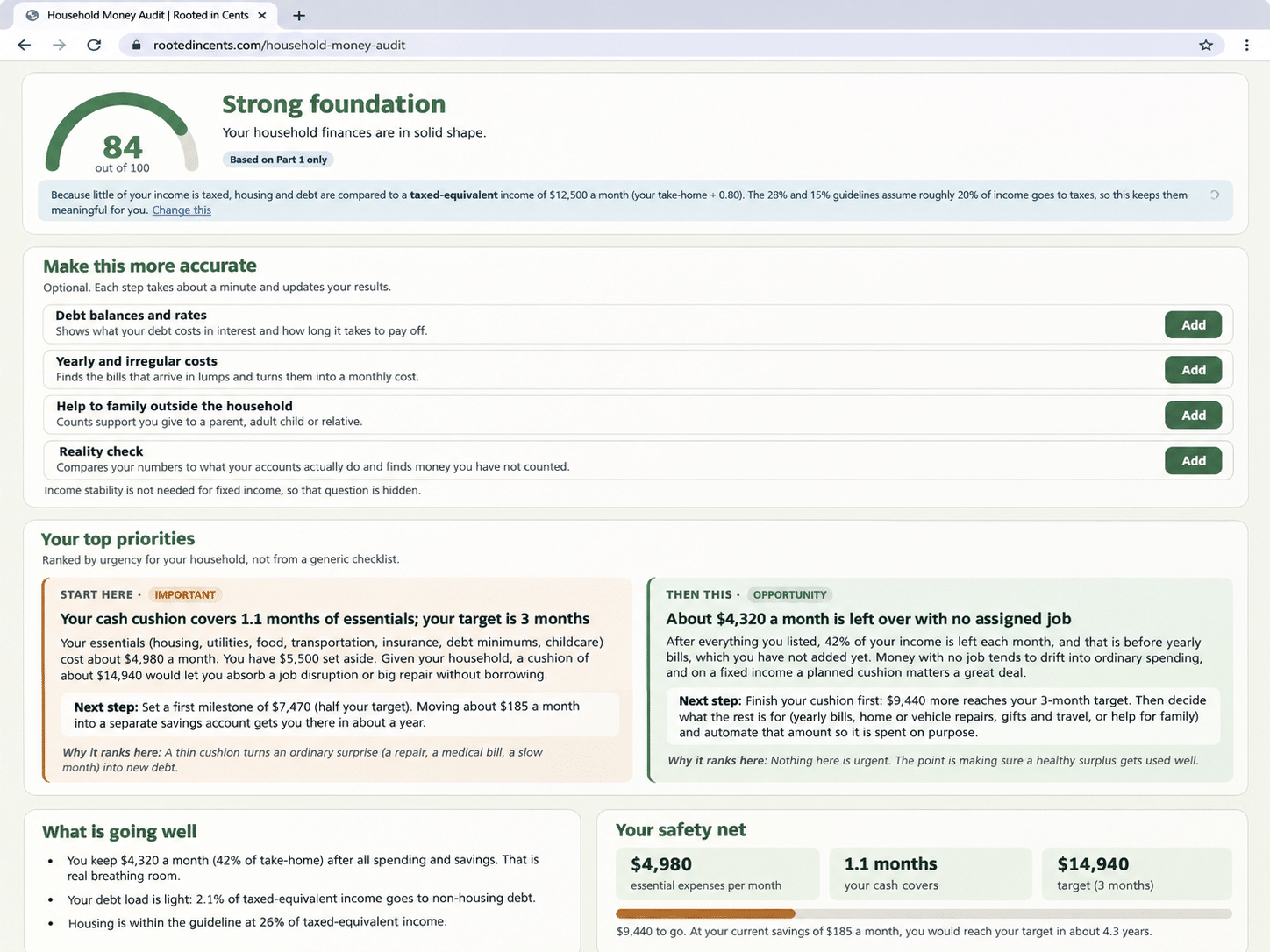
The Household Money Audit helps you get closer to an answer.
Instead of guessing which expenses are causing problems, you can see a more complete picture of your household money and identify areas that need attention.
You can stop making random cuts and start making decisions based on what’s actually happening with your money.
Know Whether Your Money Will Last Until the Next Paycheck
Imagine being able to look ahead and spot a potential money shortage before the bill arrives.
That’s what the Payday Cash Flow Planner is designed to help you do.
You can see how your expected paychecks and bills line up, identify possible tight spots, and consider adjustments while you still have time to act.
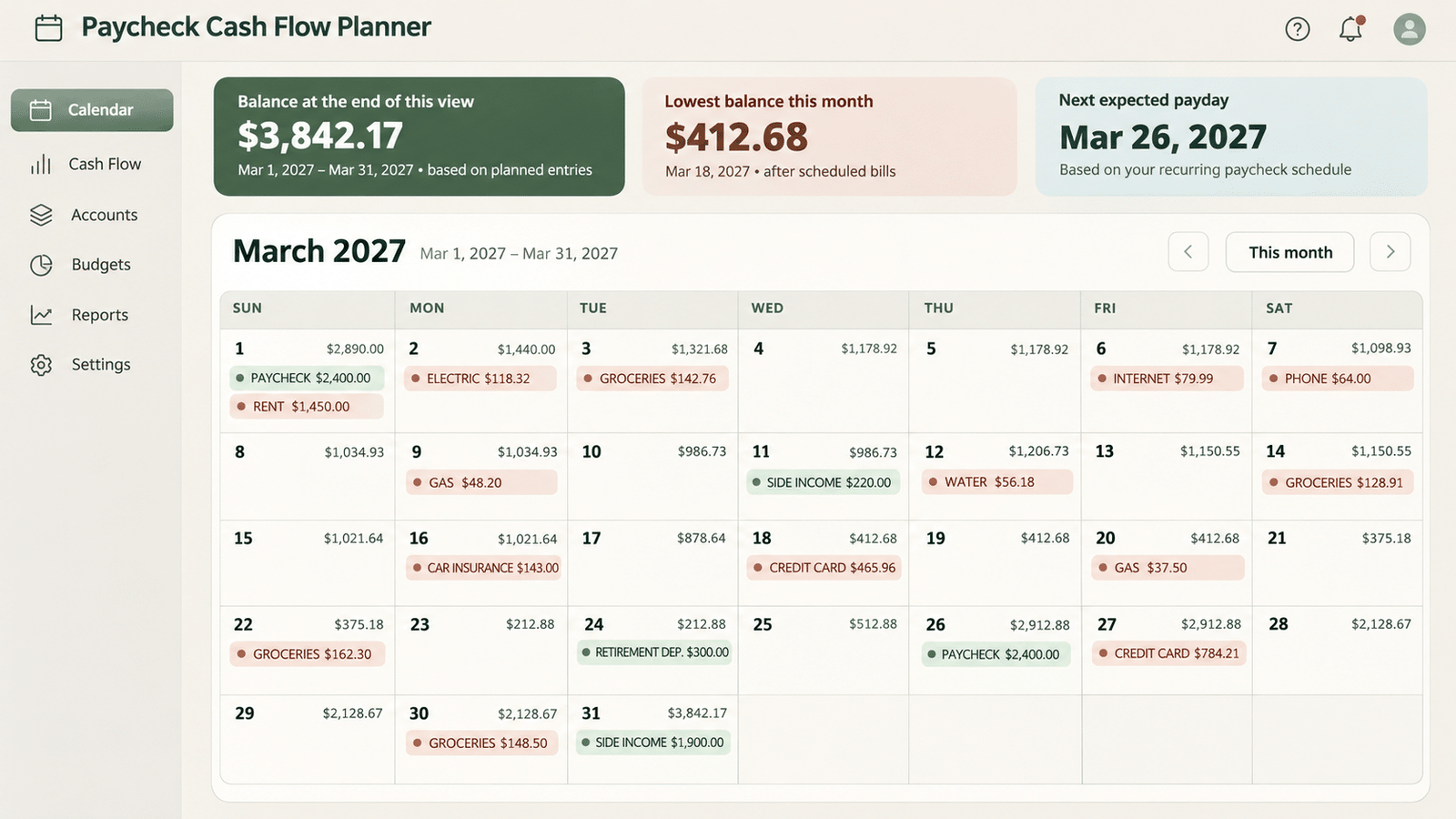
Fewer last-minute surprises and more confidence when deciding what you can afford to spend today.
Less Guessing. More Control Over Your Next Payday.
These two tools work together to help you answer the questions that matter:
- Where is our money really going?
- Why doesn’t our budget match what’s happening in our accounts?
- Will we have enough to cover the bills before payday?
- What can we adjust before we run short?
You don’t need another complicated budgeting project. You need a clearer picture of your money so you can make decisions with less uncertainty.
That’s the purpose of The Paycheck Reset
Start With the Reason, Not the Blame
If you keep running out of money before payday, another promise to “do better next month” may not be what you need.
You need to know whether the problem is the amounts, the dates, missing expenses, or income that doesn’t cover the household’s needs.
Once you know that, you can choose a more useful next step.
Start with one question: What does our money need to cover before the next paycheck arrives?
You may not be able to change everything at once, but once you know where the gap is, you can stop guessing and start making decisions that fit your household’s reality.
You don’t need a perfect budget. You need a clearer picture of your money and a plan you can actually use.
Sources
- Consumer Financial Protection Bureau, “Adjusting your cash flow.”
https://files.consumerfinance.gov/f/documents/cfbp_your-money-your-goals_adjust_cash_flow_tool_2018-11_ADA.pdf - Consumer Financial Protection Bureau, “Prioritizing bills.”
https://files.consumerfinance.gov/f/documents/cfpb_your-money-your-goals_prioritizing-bills_tool.pdf - Consumer Financial Protection Bureau, “An essential guide to building an emergency fund.”
https://www.consumerfinance.gov/an-essential-guide-to-building-an-emergency-fund/
These sources support the general financial education in this article and do not imply
endorsement of The Paycheck Reset.
This article is for financial education, not individualized financial, tax, or legal advice.