Why You Keep Spending More on Groceries Even When You’re Trying to Save
You bought the store brand. You checked the sales. You put a few things back.
Then the cashier gave you the total.
How did it get that high?
What makes it more frustrating is getting home with all those bags and still wondering what you’re going to cook for dinner.
If you’re trying to save money on groceries but your bill keeps climbing, it doesn’t automatically mean you need more discipline. Your budget may be based on old prices. You may be buying food you already have, shopping for meals that don’t fit your week, or losing part of what you buy before anyone eats it.
You may also be feeding your family as carefully as you can while dealing with costs that are genuinely difficult to cover.
The useful question isn’t, “Why can’t I get this right?”
It’s “Which part of our shopping and cooking routine is costing more than we expect?”
1. Your Grocery Budget Doesn’t Match What You’re Buying Now
Sometimes you’re buying much the same food, but the old budget no longer covers it.
Prices change. Package sizes change. Children grow. A family member may need a different diet.
Here are six places to look, with practical changes you can try before
your next grocery trip.
Meanwhile, the number you’ve allowed for groceries stays exactly where it was.
Imagine you’re still aiming for $100 a week, but your usual basket now costs $115. You can follow the same list and still finish over budget.
That’s a gap to investigate, not proof that you went wild in the snack aisle.
What to do
Compare a few recent receipts with an older one, if you have it. Look at the items you buy regularly, including their sizes.
Then check:
- Has the price increased?
- Are you buying a smaller package for the same price?
- Does your household need more food than it used to?
- Have dietary needs changed? Which products can you use?
Build your next list from current local prices rather than a total you wish would still work.
If the updated amount is unaffordable, look for specific substitutions and assistance you may qualify for. A budget shouldn’t pretend that food costs less than it does.
2. You’re Buying Ingredients Without Planning When You’ll Cook Them
Chicken, rice, vegetables, and a few pantry staples can sound like a sensible shopping list.
But what happens when you get home late, the chicken is still frozen, and the meal you pictured takes an hour?
You order dinner. The groceries are still there, and now you’ve paid for another meal.
The problem isn’t necessarily the food you chose. It may be the evening you expected yourself to cook it.
What to do
Look at your calendar before choosing dinners.
Plan easier meals for late workdays, appointments, and evenings when everybody needs to be somewhere.
That could mean eggs and toast, a meal you’ve frozen, or pasta with a simple sauce. A convenience ingredient can be worth buying if it makes a realistic dinner possible.
Choose meals your household actually eats. Give leftovers a specific place in the plan instead of hoping somebody will finish them.
Then include breakfasts, lunches, and snacks when you build the shopping list. Planning five dinners won’t account for everything your family needs.
The Environmental Protection Agency recommends making a shopping list around the meals you’ll actually eat at home, including planned leftovers and nights when you won’t cook. [1]
A useful meal plan fits the week you’re having, not the week when everyone has unlimited time.
3. You Can’t See the Food You’ve Already Paid For
You buy another bag of rice because you aren’t sure there’s any left.
Then you find two bags behind the cereal.
Or you buy chicken while a package sits forgotten in the freezer.
Shelf-stable duplicates aren’t always wasted. But they use money you may have needed for milk, produce, or another bill this week.
And when you don’t know what’s on hand, it’s harder to use the older food first.
What to do
Before shopping, check three places: the refrigerator, the freezer, and the pantry.
You don’t need to count every teaspoon of paprika. Start with the foods that affect your next few meals.
Make a short “use first” list:
- Cooked chicken that needs a meal planned around it.
- Half a package of tortillas.
- Vegetables you need to use soon.
- A frozen dinner you’d forgotten you made.
Build a few meals around those items, then add only the missing ingredients to your shopping list.
The EPA specifically recommends checking your food storage before shopping and planning meals around what needs to be used. [1]
Buying less isn’t the only way to stretch a grocery budget. Sometimes it’s using the groceries you already bought.
4. A Sale or Bulk Package Makes You Spend More Than You Planned
A lower price per ounce can be a good deal.
It can also persuade you to buy far more than your household will use.
Suppose a large tub costs $6 and a smaller one costs $4. The large one may offer more food for each dollar. But if you eat only half and throw the rest away, the extra quantity doesn’t help your family.
You’ve still spent $2 more at checkout.
Bulk buying isn’t wrong. Neither is choosing the smaller package when it fits your money, storage, and appetite better.
What to do
Ask three questions before buying extra:
- Would we buy this without the sale sign?
- Will we use or safely freeze this amount?
- Can we afford the larger purchase without leaving other needs uncovered?
Compare unit prices using the same measure, such as price per ounce or per pound. Don’t assume the largest package is cheapest.
Check promotion terms, too. Some offers require a particular quantity, a store account, or a digital coupon.
If you buy extra meat or bread, decide how you’ll portion and store it when you get home.
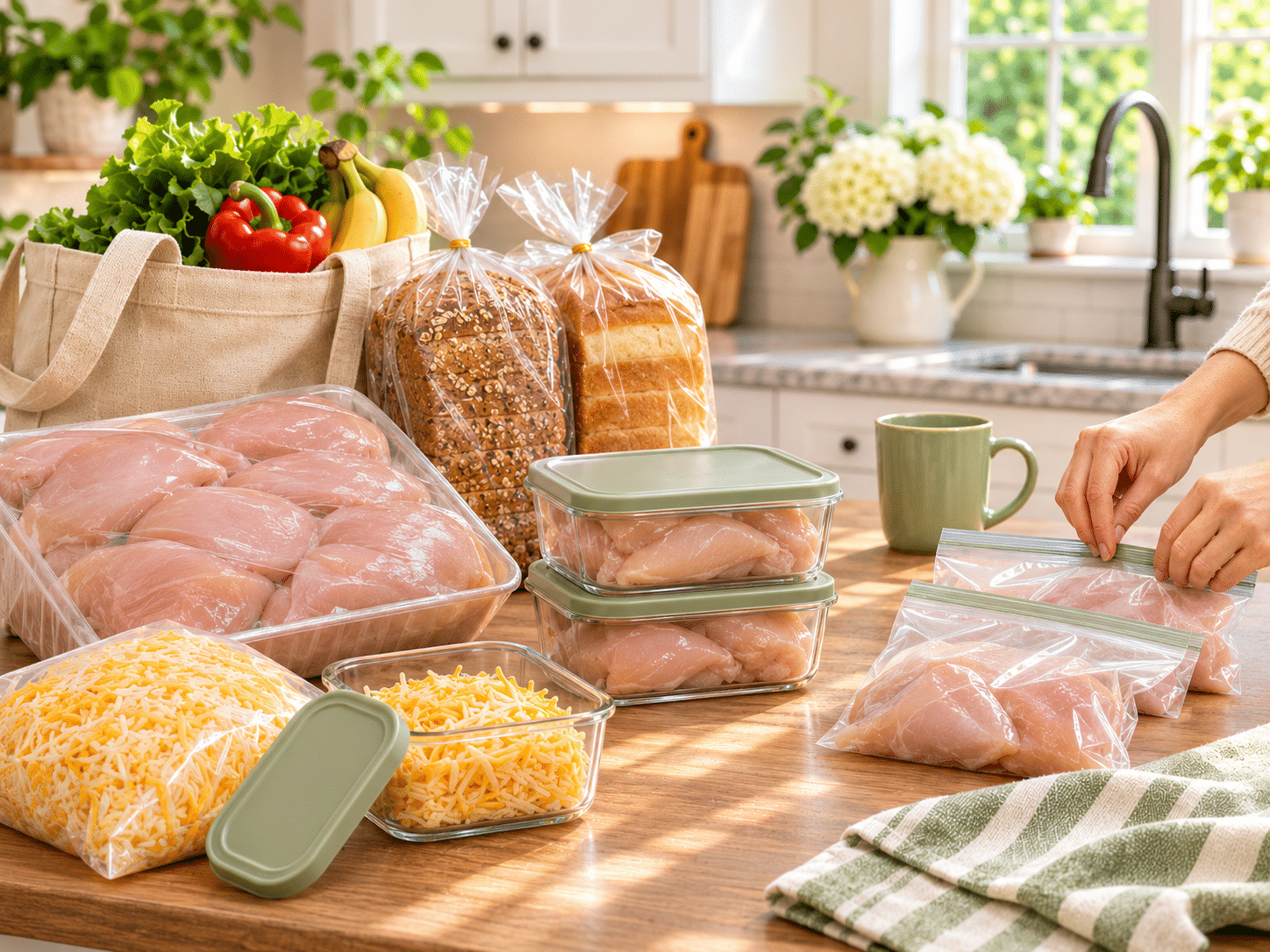
The EPA cautions that large-quantity purchases save money only when the food gets used before it spoils. [1]
A bargain should work after you bring it home, not just look good on the shelf.
5. You’re Buying Food With Good Intentions but No Use-It-Up Plan
The salad greens were for healthier lunches. The berries were for breakfast. The extra casserole was supposed to save time.
Then plans changed.
The greens wilted. The berries disappeared behind something else. Nobody remembered when the casserole was made.
That doesn’t mean you should stop buying fresh food or cooking extra. It means the plan needs a step after checkout.
What to do
When you put groceries away, decide what needs to be used first.
Keep ready-to-eat items visible and mark prepared food with the date. Plan the more perishable ingredients earlier in your shopping cycle.
If a family-size container regularly goes unfinished, try a smaller one. Frozen vegetables or fruit may fit your routine better than fresh versions you struggle to finish.
Give extra cooked portions a purpose: tomorrow’s lunch or a meal to freeze, not just “leftovers.”
Food safety still comes first. USDA guidance says to refrigerate perishable leftovers within two hours, or one hour when it’s above 90°F. Divide larger amounts into shallow containers so they cool quickly. [2]
Properly handled leftovers generally keep for three to four days in a refrigerator at 40°F or below. Freeze portions promptly if you won’t use them within that window. [2]
Freezing doesn’t make spoiled or improperly stored food safe.
You don’t have to eat something questionable to prove you’re being frugal.
6. You’re Counting the Big Grocery Trip but Missing the Rest
You remember the $140 weekly shop.
The $18 stop for milk and a few extras? That feels separate. So does the delivery order when you run out of lunches.
Together, they still come out of your household money.
There’s another complication: your grocery receipt might include laundry detergent, toiletries, and pet supplies. Those are real expenses, but they aren’t all food.
If everything is mixed together, it’s difficult to tell what’s actually getting more expensive.
What to do
For a few weeks, record every food purchase, including shorter trips and online orders.
Separate groceries from household supplies, pet costs, and restaurant meals. Include delivery fees and tips in the category where you track that order.
The point isn’t to make the grocery number look smaller. It’s to see the full cost clearly.
Before an extra store trip, write down what you’re missing and why.
Did you forget lunch ingredients? Buy too little milk? Plan a dinner nobody wanted?
Use that answer to improve the next main shopping list.
Extra trips aren’t always avoidable. But repeated trips for the same missing items can show you where the plan needs adjusting.
A Simple Reset Before Your Next Grocery Trip
You don’t need to reorganize the entire kitchen this weekend.
- Check what you have. Look in the pantry, refrigerator, and freezer.
- Choose what needs to be used first. Start with food that can safely become a meal soon.
- Plan meals around your actual week. Include easy dinners, lunches, breakfasts, and snacks.
- Write down the missing ingredients and quantities. Cross off what you already own.
- Estimate the total before shopping. Use your store’s current prices where possible.
- Afterward, notice what happened. What went uneaten? What ran out? What caused an extra trip?
If dinner came from groceries you already had, that’s useful information.
If a recipe didn’t fit your schedule, that’s useful, too.
You’re building a routine that works for your household, not trying to win
a contest for the smallest receipt.
Two Tools That Help You Put This Into Practice
You can start with a sheet of paper and a look through your cupboards. You don’t need to buy anything to take those first steps.
If you’d like more structure, two resources in my Rooted in Cents Grocery Reset package support the routine we’ve discussed.
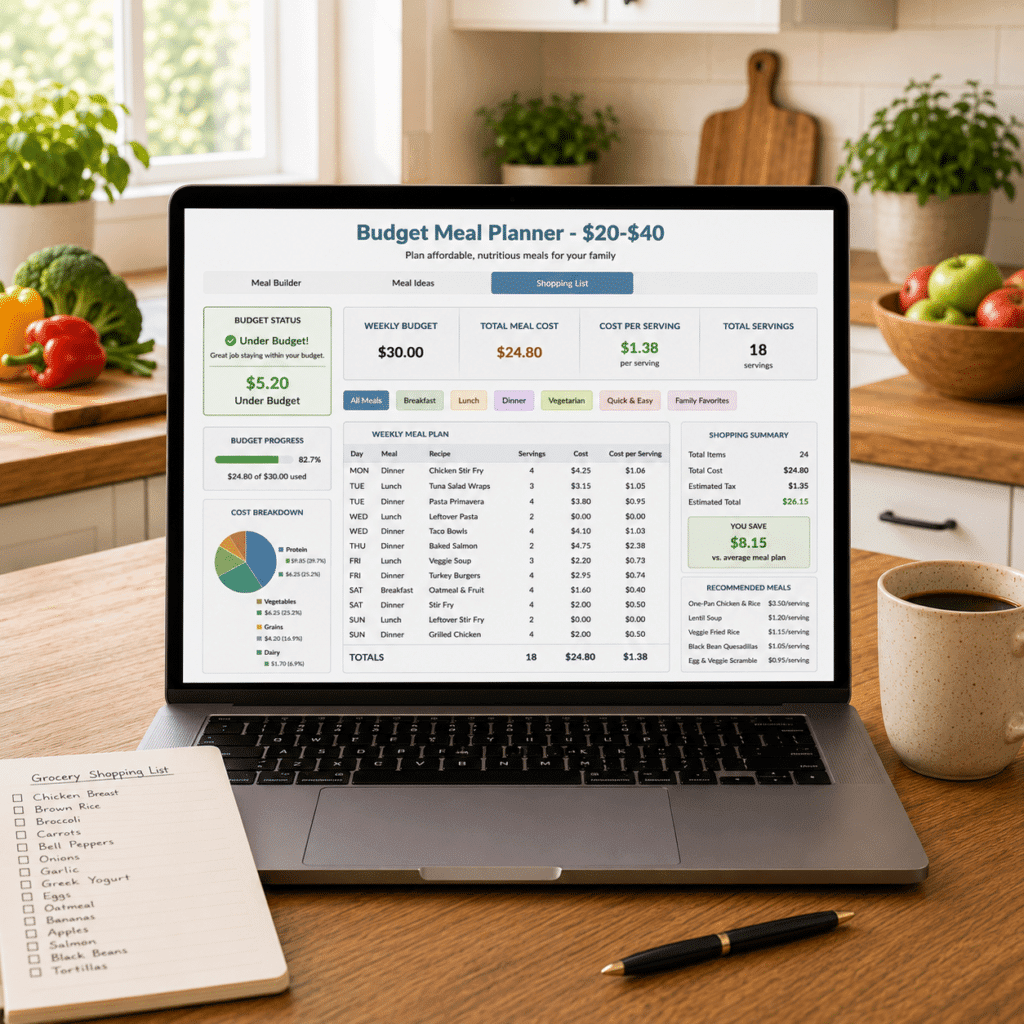
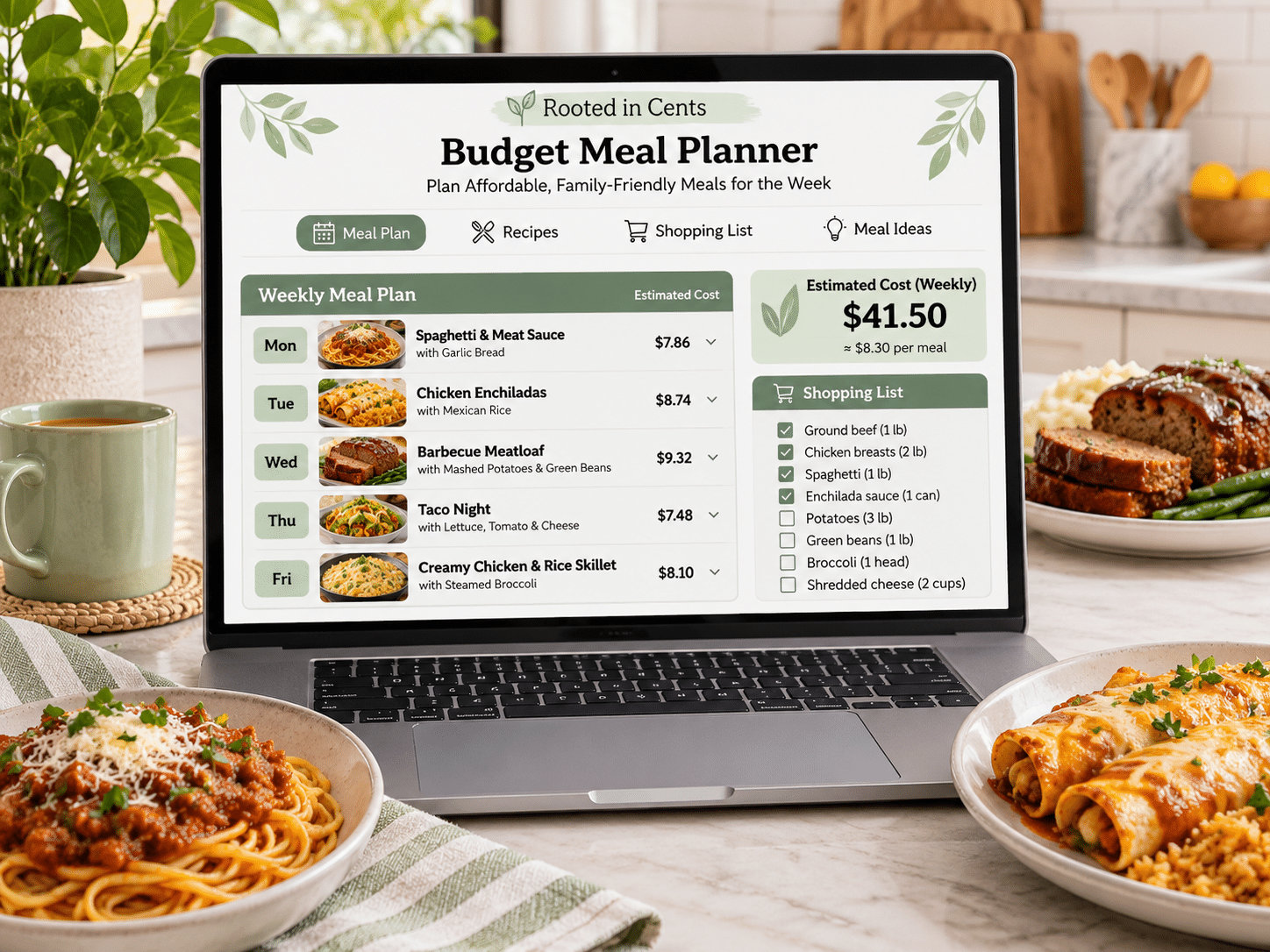
The Budget Meal Planner helps you come home with groceries that have a purpose, instead of a cart full of ingredients and no answer to “What’s for dinner?” Choosing dinners before you shop gives you a clearer idea of what you need and what you can leave on the shelf. You can check the estimated cost before buying, adjust prices to match your store, and head into the week with fewer dinner decisions left to make.
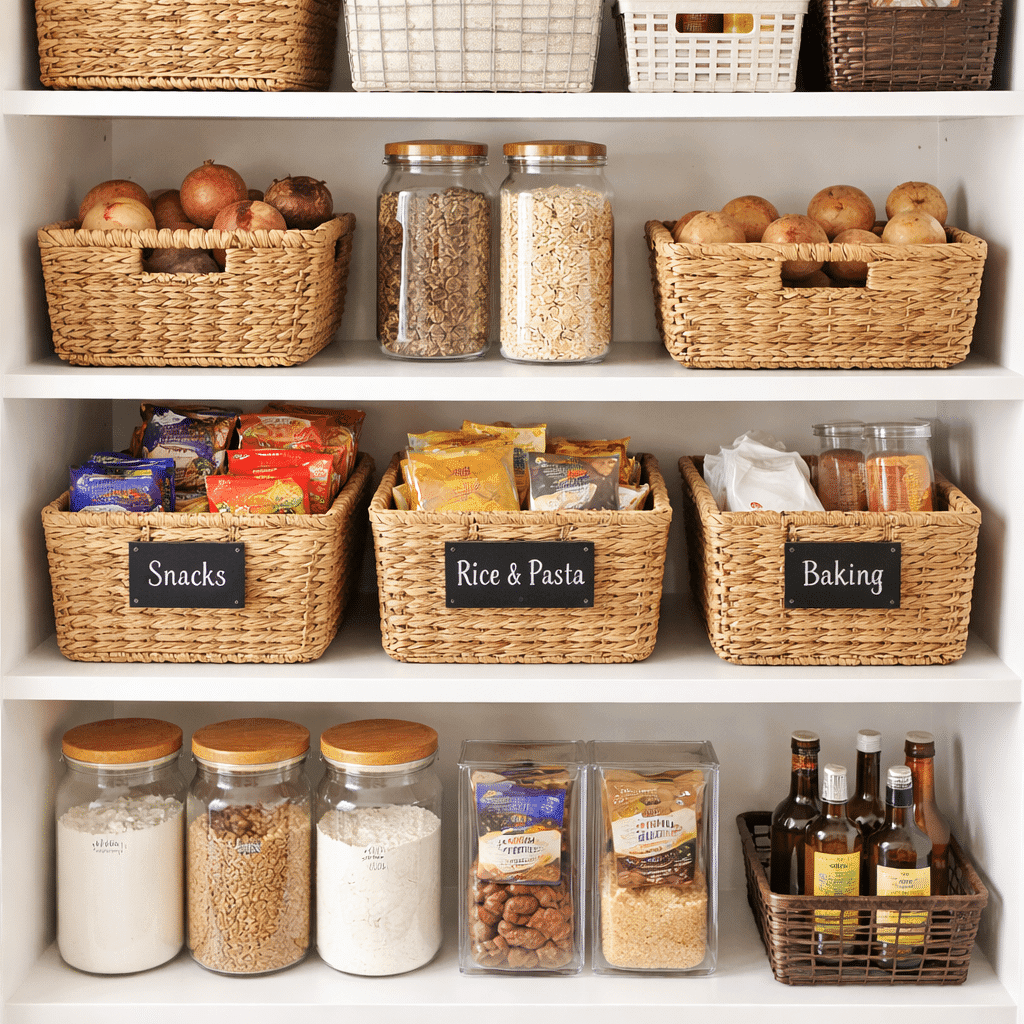
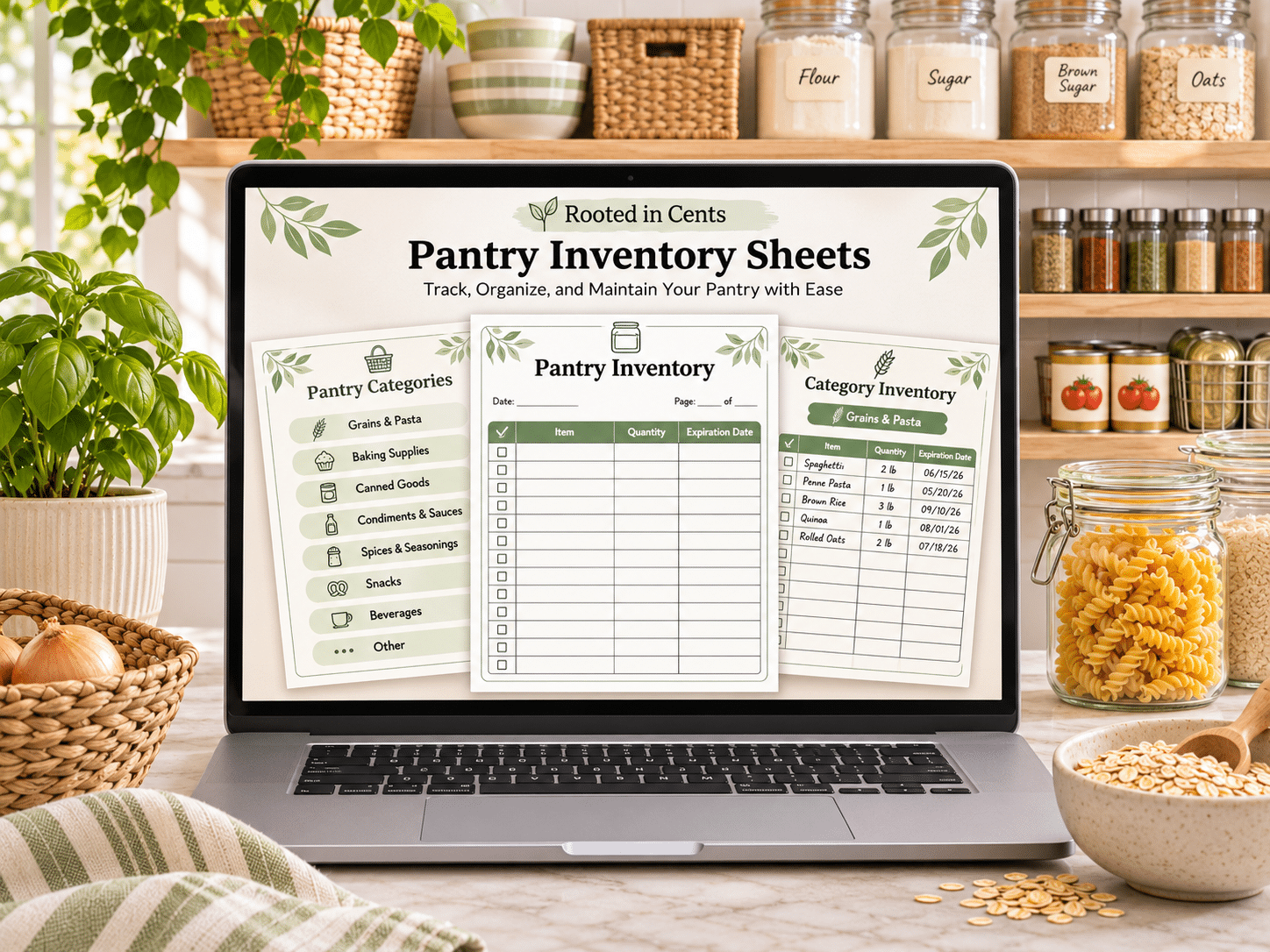
The Interactive Pantry Inventory Sheets can help you avoid buying a third package of something already sitting in your cupboard. When you can see what’s in the pantry, refrigerator, and freezer, it’s easier to plan dinner around the chicken you’ve already bought or use those tortillas before they go to waste. That’s money you’ve already spent getting a chance to feed your family, rather than being forgotten while you buy more.
Used together, they help you start with what you have and shop for what’s missing, instead of starting from scratch at the store.
They won’t guarantee a particular grocery bill. The benefit is a more useful plan: fewer duplicate purchases, less dinner-time guesswork, and more of the food you buy becoming meals.
Explore The Grocery Reset on our money tools page.
Make More of the Groceries You Already Buy
Saving money on groceries isn’t always about finding another coupon, switching brands, or cutting something else from your shopping list.
Sometimes the biggest opportunity is sitting right in your kitchen.
It’s the chicken you forgot you froze, the vegetables that need to be used, or the ingredients you bought with every intention of cooking.
You can’t control grocery prices, and sometimes the amount your household needs to spend is genuinely more than your budget can comfortably cover.
But you can start making more intentional decisions about the food you purchase, the meals you plan, and what you already have available.
Before your next grocery trip, do one thing: shop your kitchen first.
Check your pantry, refrigerator, and freezer. Plan a few meals around what you find. Then buy what you actually need to complete those meals.
The goal isn’t simply to spend less at the grocery store. It’s to get more meals, more value, and less waste from the money you’re already spending.
If you’re spending more on groceries even when you’re trying to save, you may not need another list of things you’re never allowed to buy.
You may need a closer look at current prices, the meals your family will eat, the food already in your kitchen, and what happens between shopping trips.
You can’t control every price. And if your food budget isn’t enough to meet your household’s needs, seeking assistance is a practical step, not a failure.
But where there’s room to change the routine, start small.
Before you write your next grocery list, ask:
What have we already paid for that could help feed us this week?
That’s a useful first step toward making more of your groceries into meals.
Sources and Further Reading
- U.S. Environmental Protection Agency, “Preventing Wasted Food At Home.” Guidance on checking food supplies, planning meals, shopping quantities, storage, and bulk purchases.
https://www.epa.gov/recycle/preventing-wasted-food-home - USDA Food Safety and Inspection Service, “Leftovers and Food Safety.” Guidance on prompt cooling, refrigerator storage, and freezing leftovers.
https://www.fsis.usda.gov/food-safety/safe-food-handling-and-preparation/food-safety-basics/leftovers-and-food-safety
These independent sources support the educational guidance in this article.
Their inclusion does not imply endorsement of The Grocery Reset.