Living pantry rules are simple systems built around visibility, food flow, and weekly habits that help families save money and reduce food waste over time.
Instead of reorganizing once and hoping it sticks, a living pantry adapts to real-life busy weeks, changing schedules, and fluctuating grocery prices while quietly lowering your monthly food bill.
The Pantry Problem Nobody Talks About
Here is a number that should make you stop and think. The average American family throws away about $1,500 worth of food every single year. That is not a typo. Fifteen hundred dollars is going straight into the trash.
And here is the thing. Most of that waste starts in the pantry. Not in the fridge with the wilted lettuce, but in the pantry with the cans you forgot you had, the pasta that expired six months ago, and the ingredients you bought for a recipe you never made.
$1,500 food is wasted per family yearly
33% of all US food goes uneaten
28% food price increase since 2019
88% changed grocery habits due to inflation
I am not just talking theory here. I just made this mistake myself. I was cleaning out my pantry and found food tucked away in the back that had expired. Foods I completely forgot I had. The money I spent went straight into the trash because I couldn’t see what was hidden behind everything else.
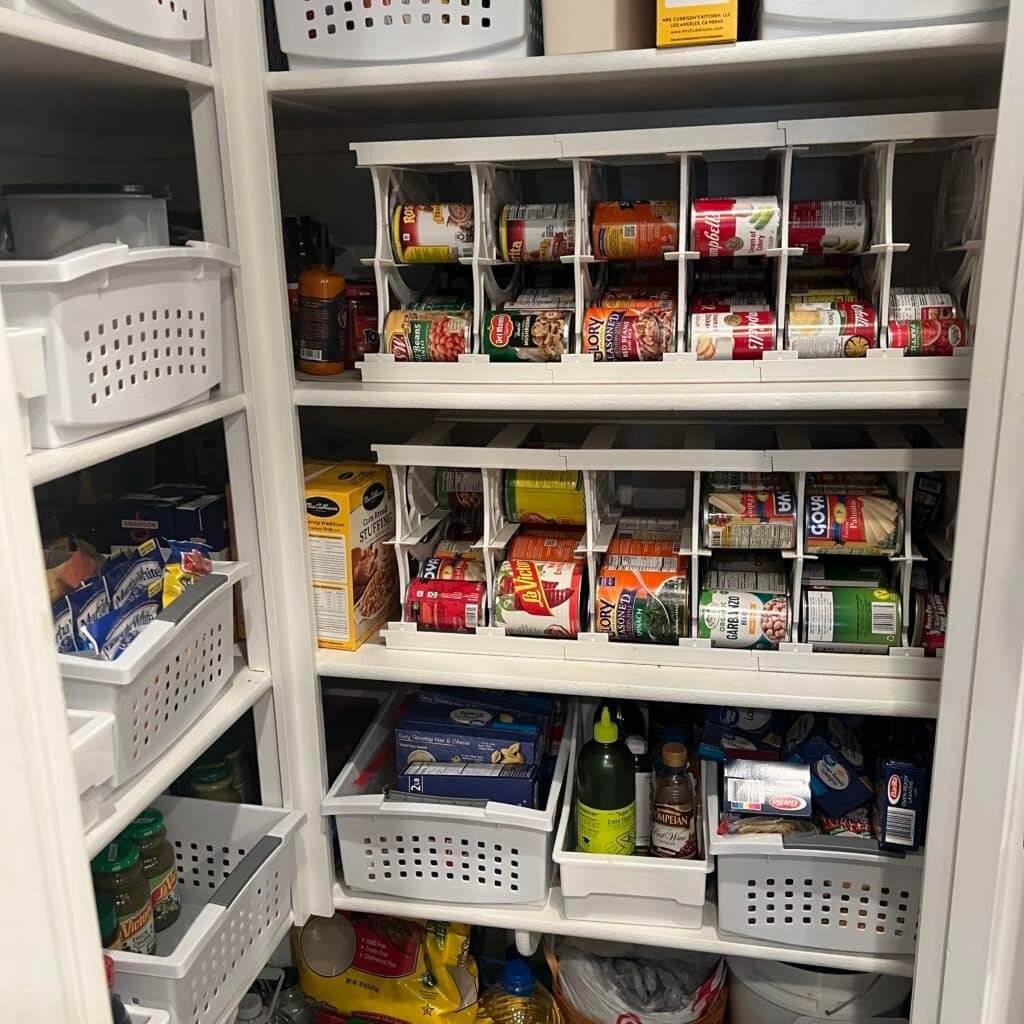
Today I am sharing 10 pantry rules that I call “living” rules because they are not set and forget. They are systems you actually live with, adjust, and use every single week. These are the rules that help families save hundreds of dollars every month without feeling like they are constantly sacrificing.
1 The Visibility Rule
If you cannot see it, you will not eat it. This is the foundation of everything else. A pantry where items hide behind other items is a pantry that wastes money.
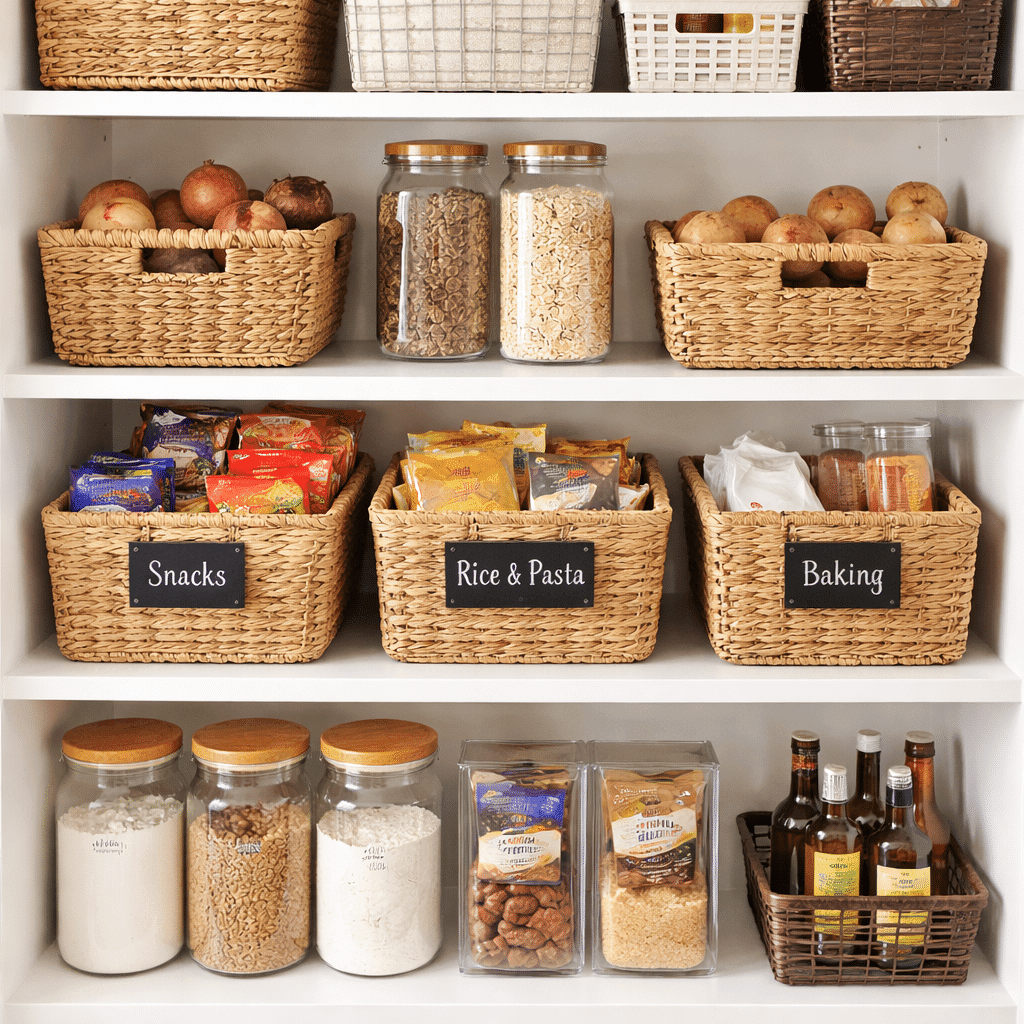
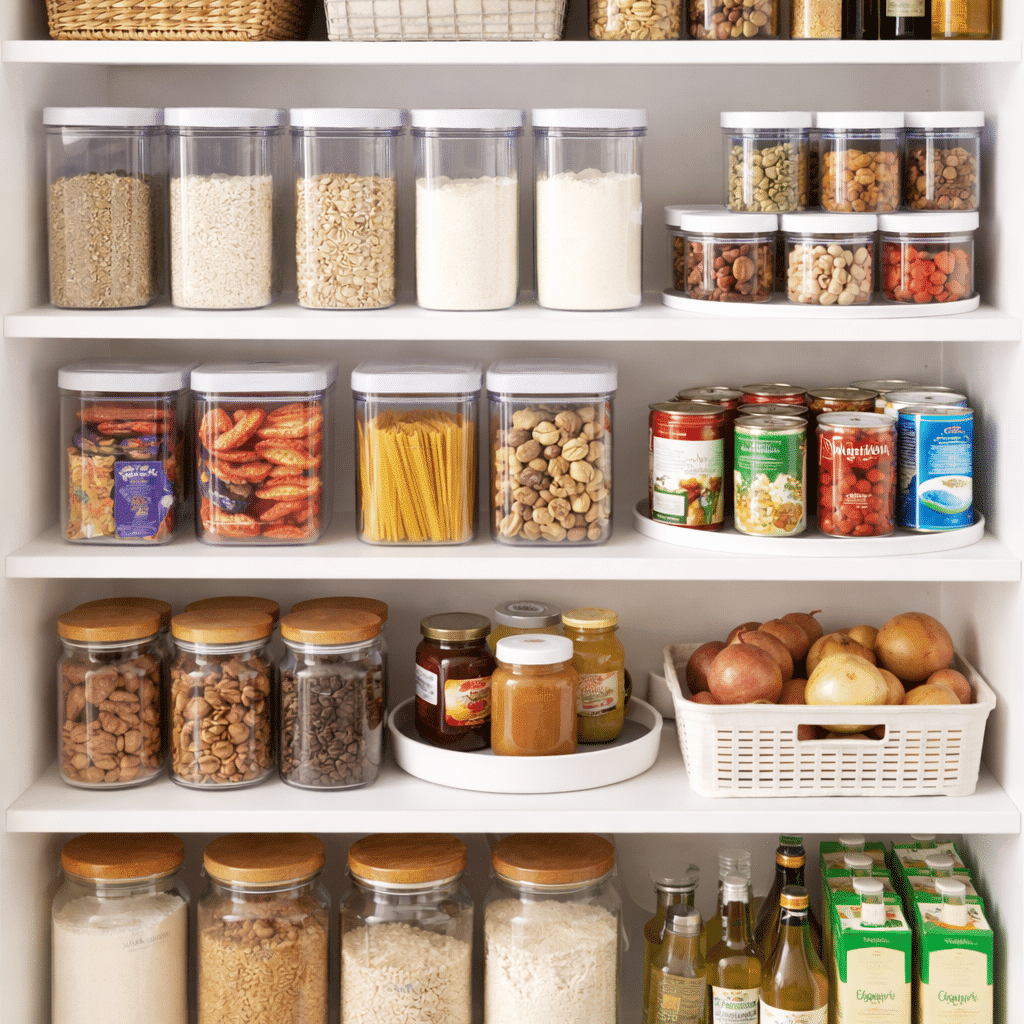
Set up your pantry so you can see every single item at a glance. Use smaller categorized bins instead of one giant bin where everything gets lost. Clear containers for dry goods. Shelf risers to create two levels on one shelf.
When you can see everything you own, you stop buying duplicates. You stop forgetting what you have. And you start using ingredients before they expire. This one change alone can cut your food waste by 20% or more.
2 The First In, First Out System
This is what restaurants call FIFO, and it is how they avoid throwing away expensive inventory. When you put away groceries, newer items go in the back. Older items get pulled to the front. Always grab from the front.
You can get fancy with rotating can racks if you want. They cost about $30 to $50 and they automatically push older cans forward when you load new ones from the back. But you do not need anything fancy. Just make it a habit: new goes behind, old goes forward.
The reason this works is simple. You eat the oldest items first, nothing expires unnoticed, and you never open a can only to find out you have three more hiding behind it.
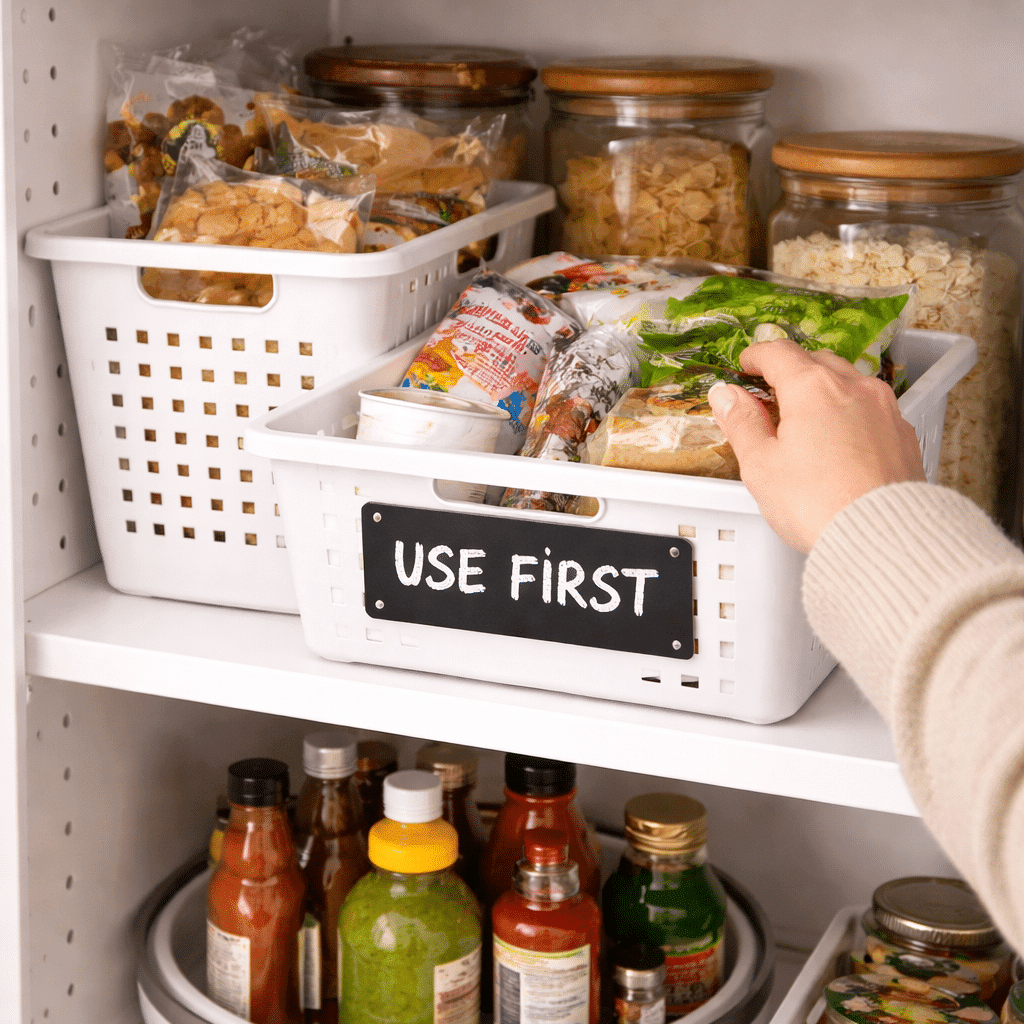
3 The Use First Zone
This is a game changer for families. Designate one shelf or one bin as your “use first” zone. Anything that is already open, anything approaching its expiration date, anything that needs to be eaten soon goes in this zone.
Use masking tape and a marker to label items with the date you opened them. When you are planning meals for the week, you start with this zone. What needs to be used? Build your meals around those ingredients first.
This solves the problem of half-used jars getting pushed to the back and forgotten. It solves the problem of good food going bad because nobody realized the clock was ticking. And it makes meal planning faster because you have a clear starting point.
4 The One Trip Rule
Here is something backed by actual research. The more often you visit the grocery store, the more money you spend. Every trip creates another opportunity for impulse purchases. Those “I’ll just grab a few things” trips are budget killers.
One study found that shoppers who reduced their trip frequency saved about $200 per month. Not by buying different things, just by going less often.
The goal is one trip per week maximum. Plan your meals, make your list, and get everything in one visit. If you have to go back midweek for fresh items like milk or bread, stay on the perimeter of the store where the essentials are. Do not wander the aisles.
Better yet, use curbside pickup or grocery delivery. You only get what is on your list. No browsing, no impulse buys, no extra items “just in case.”
I personally use grocery delivery. For about $99 a year, my groceries are delivered straight to my door. It saves me time, eliminates extra trips to the store, and keeps me on budget because I shop directly from my list in the app.
5 The Pantry First Menu
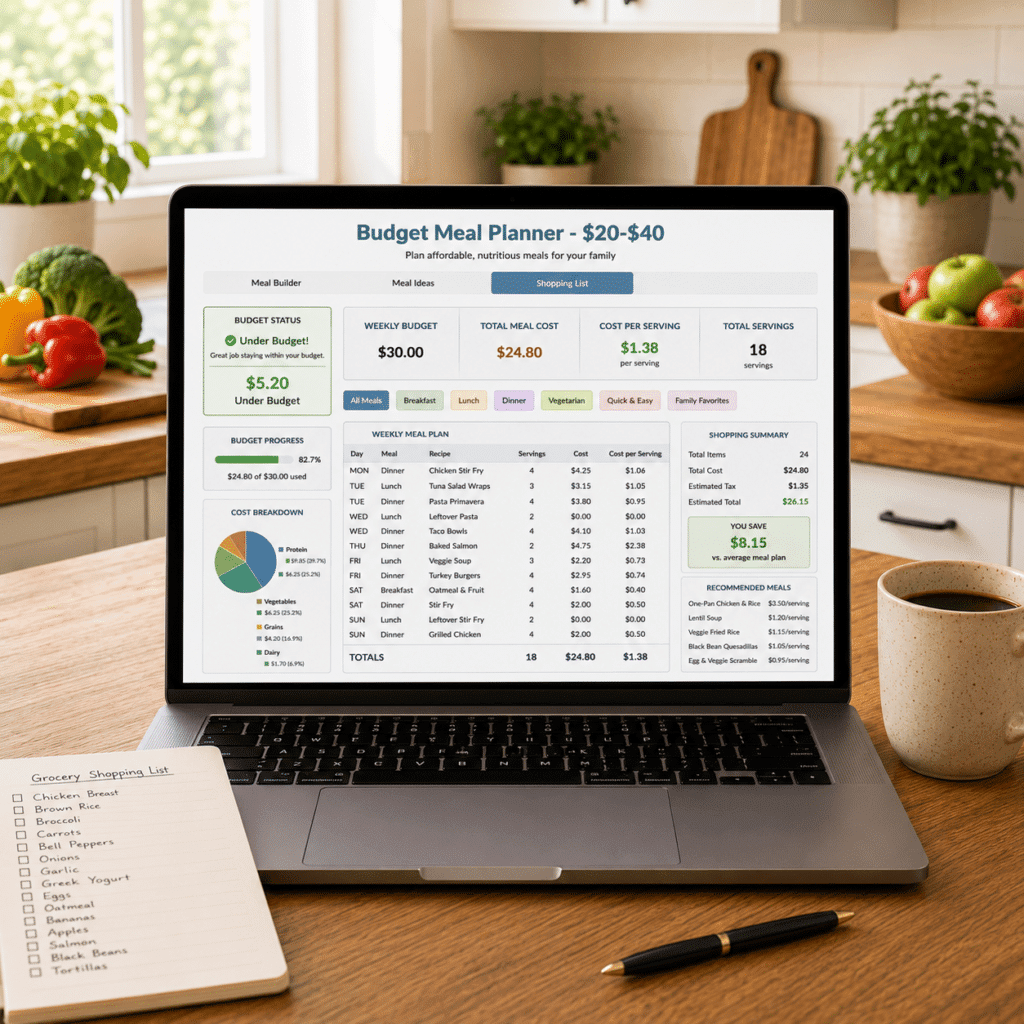
Most people plan their meals and then go shopping. This gets it backwards. The money saving approach is to shop your pantry first, then plan your meals around what you already have, then buy only what is missing.
Every week before you make a grocery list, spend 10 minutes looking at your pantry, fridge, and freezer. Ask yourself: what do I already have that needs to be used? What meals can I make from these ingredients?
This approach means you are constantly eating down your inventory instead of letting it pile up. You reduce waste. You buy less. And honestly, you get more creative with your cooking because you are working with what you have instead of always reaching for what is convenient.
6 The Inflation-Proof Staples
Not all pantry items are created equal when it comes to value. There is a specific list of staples that give you the most nutrition and versatility for the lowest cost, and they last practically forever.
These are your inflation fighters: rice, dried beans, lentils, oats, pasta, flour, canned tomatoes, peanut butter, and powdered milk. Dried beans are two to three times cheaper than canned and store for two years. Rice bought in bulk costs pennies per serving. Oats can be breakfast, a baking ingredient, or even ground into flour.
When these items go on sale, that is when you stock up. A well-stocked pantry of these basics means you can always put together a nutritious meal even when money is tight.
The Power Staples List
- Rice and pasta: pennies per serving, years of shelf life
- Dried beans and lentils: cheapest protein available
- Oats: breakfast, baking, or homemade flour
- Canned tomatoes: the base of hundreds of recipes
- Peanut butter: protein, fat, and satisfaction
- Powdered milk: lasts years, saves when dairy prices spike
7 The Pantry Challenge Month
Once a month, or at least once a quarter, do a pantry challenge. This is a period, usually one to two weeks, where you eat primarily from what you already have. You minimize grocery shopping to only fresh essentials like milk, eggs, and produce.
Families who do regular pantry challenges report saving $50 to $100 each time. But the real benefit is awareness. You discover what you actually have. You use up items that have been sitting there for months. And you reset your buying habits because you see exactly how much food you were stockpiling without realizing it.
Set your own rules. Maybe you allow yourself $20 for fresh items during the challenge. Maybe you make it a game for the kids. The point is to break the cycle of buying before using.
8 The Date Label Truth
Here is something most people do not know. Confusion over date labels causes about 20% of consumer food waste. That “best by” date on the can? It is not an expiration date. It is when the manufacturer thinks the product is at peak quality.
Most shelf-stable items are perfectly safe and nutritious well past those dates. Canned goods can last one to five years past the printed date if stored properly. Dry pasta, rice, and beans last even longer.
Stop throwing away perfectly good food because of a printed date. Use your senses. If it looks fine, smells fine, and tastes fine, it is fine. Those dates are about quality, not safety. The only exception is baby formula, which is the only product where the date is actually regulated.
9 The Weekly Five Minute Reset
The biggest reason pantry systems fail is maintenance. People set up a beautiful organized pantry, and within a month it is back to chaos. The solution is a simple weekly habit that takes five to ten minutes.
Once a week, probably the day before you go grocery shopping, do a quick pantry reset. Pull items forward. Check for anything that needs to go in the use first zone. Wipe down shelves if needed. Adjust your grocery list based on what you actually need.
This tiny time investment keeps your system running. It prevents the slow creep back to disorganization. And it keeps you aware of what you own, which is the foundation of not wasting money.
10 The Bulk Buying Boundary
Bulk buying only saves money if you actually use everything before it expires. This seems obvious, but it trips up so many families. That giant bag of flour from the warehouse store is not a deal if half of it goes stale before you use it.
Here is the rule: only buy in bulk what you use consistently and what stores without spoiling. Rice, yes. Dried beans, yes. Canned goods, yes. Fresh produce in bulk? Almost never a good idea unless you have a specific plan to use or preserve it.
Before you buy in bulk, ask yourself: when did I last use this item? How quickly will I go through this quantity? Do I have space to store it properly? If you cannot answer those questions confidently, buy the regular size and save your money for something you will actually use.
Putting These Rules Into Practice
Now, I do not want you to try to implement all ten of these rules at once. That is a recipe for getting frustrated and giving up. Start with the ones that address your biggest problems.
Where to Start Based on Your Situation
If you are always throwing away expired food:
Start with Rule 1 (Visibility), Rule 2 (FIFO), and Rule 3 (Use First Zone)
If your grocery bill keeps creeping up:
Start with Rule 4 (One Trip), Rule 5 (Pantry First Menu), and Rule 7 (Pantry Challenge)
If you want to be prepared for tight months:
Start with Rule 6 (Inflation-Proof Staples) and Rule 10 (Bulk Buying Boundary)
Pick two or three rules that resonate with you. Master those first. Then add more as they become habits. Within a few months, you will have a pantry that works for you instead of against you.
The Math Behind a Living Pantry
Let me show you what these rules can actually do for your budget.
Family Spending $600/Month on Groceries
Current Food Waste
At the national average of 30% waste, this family is throwing away about $180 per month in food.
With Living Pantry Rules
Reducing waste by just half saves $90 per month. Adding one trip rule and pantry first menu saves another $50 to $100.
Total monthly savings: $140 to $190
Annual savings: $1,680 to $2,280
These are not theoretical numbers. These are what families actually report when they implement systems like this. The savings come from three places: less food waste, fewer impulse purchases, and better use of what you already own.
Track Your Pantry, Refrigerator, and Freezer in One Place
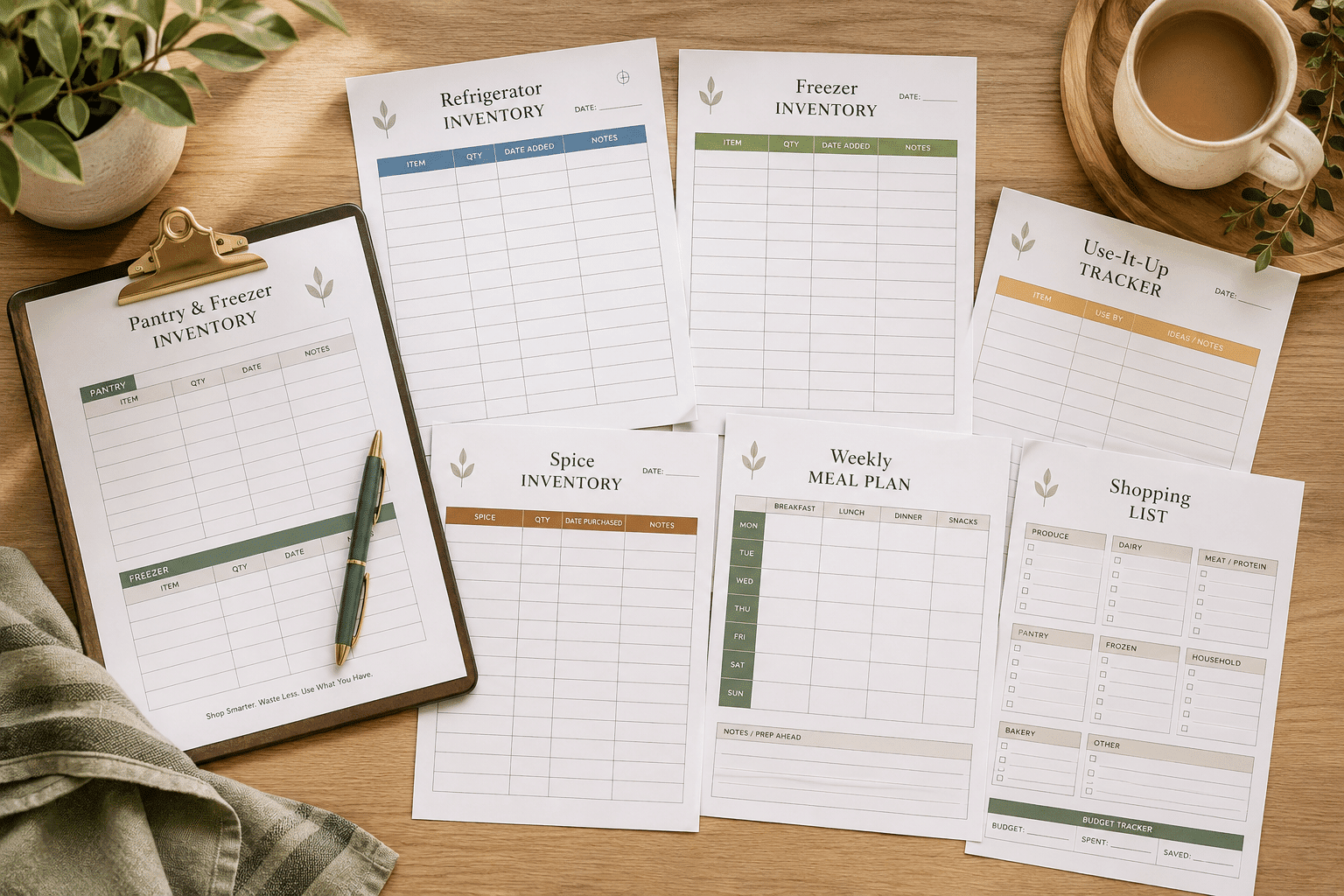
Know what you have before you shop. Download our free Pantry Inventory Sheets to reduce food waste, prevent duplicate purchases, and make every grocery dollar count.
Your Next Step
Here is what I want you to do this week. Go look at your pantry right now, not to reorganize it, just to look. Notice what you can see easily and what is hiding. Notice if there are items that have been sitting there for months. Notice duplicates you forgot you had.
That awareness is the first step. Once you see the problem clearly, the solutions become obvious.
A living pantry is not about being perfect. It is about having simple systems that keep working week after week. It is about spending less mental energy wondering what to make for dinner and less money replacing food that went bad.
Start with one rule. Just one. See how it feels. Then add another. Before you know it, your pantry will be saving you money instead of costing you.
Quick Reference: The 10 Living Pantry Rules
- Rule 1: The Visibility Rule: if you cannot see it, you will not eat it
- Rule 2: First In, First Out: new items go behind, old items go forward
- Rule 3: The Use First Zone: one shelf for items that need to be eaten soon
- Rule 4: The One Trip Rule: fewer store visits means less impulse spending
- Rule 5: Pantry First Menu: plan meals around what you have before shopping
- Rule 6: Inflation-Proof Staples: stock the items that give the most value
- Rule 7: The Pantry Challenge: regularly eat down your inventory
- Rule 8: The Date Label Truth: most dates are about quality, not safety
- Rule 9: The Weekly Five Minute Reset: quick maintenance prevents chaos
- Rule 10: The Bulk Buying Boundary: only buy bulk what you will actually use
Frequently Asked Questions
How long does it take to set up a pantry system like this?
The initial organization takes about one to two hours. After that, the weekly reset takes only five to ten minutes. Most families find that the time invested pays back quickly in reduced shopping time and meal planning stress.
What if I have a small pantry with limited space?
Small pantries actually benefit most from these rules. When space is limited, visibility becomes even more important. Use door racks, shelf risers, and smaller containers to maximize every inch. The key is being able to see everything at once, which is easier in a compact space.
How do I get my family on board with this system?
Start with the use first zone because it makes their lives easier. They always know where to look for quick snacks and ingredients. For kids, make the pantry challenge a game with a reward for reaching the goal. When they see the savings add up, buy-in usually follows.
Should I buy special containers and organizing products?
You do not need anything fancy to start. Shoeboxes, mason jars, and cardboard boxes work fine for categorizing. If you want to upgrade later, clear airtight containers and can racks are worth the investment. But do not let lack of supplies stop you from starting.
How do I know if a date label is a “best by” or expiration date?
Look for the wording. “Best by,” “best before,” and “use by” indicate quality, not safety. “Sell by” is for retailers, not consumers. True expiration dates are only required on baby formula and some medications. When in doubt, trust your senses: look, smell, and taste.
What about fresh produce and refrigerator items?
The same principles apply. Create a use first zone in your fridge. Store items approaching their end at eye level. Group similar items together. The visibility rule is even more important for perishables since they have shorter windows before they go bad.
How often should I do a full pantry cleanout?
A deep cleanout once or twice a year is enough if you are doing weekly five minute resets. The best times are January after the holidays, and late summer before back to school. These natural transitions make it easier to reset habits and catch items that slipped through the cracks.