

10 Proven Budgeting Strategies to Take Control of Your Finances
Does it ever feel like your money disappears the moment it hits your account?
Living paycheck to paycheck is exhausting, but you don’t have to stay there. Budgeting isn’t about restriction; it’s about giving your money direction.
With the right strategies, you can pay down debt, save for what matters, and build financial security without feeling like you’re constantly sacrificing. These are the same approaches that have helped countless one-income and frugal families (mine included) finally feel in control of their finances.
In This Guide
Here’s what you’ll learn in this post:
- Why budgeting is essential to financial success
- The biggest mistakes to avoid when creating a budget
- 10 proven strategies that actually work
- Tools and resources to make budgeting easier
- How to stay consistent and keep improving over time
The Importance of Budgeting
Budgeting is the foundation of financial stability. It helps you understand where your money is going, make intentional choices, and avoid unnecessary debt. Without one, even a good income can slip away with little to show for it.
Benefits of Budgeting
- Clarity: Know exactly where your money goes.
- Savings: Build an emergency fund and plan for future goals.
- Confidence: Reduce stress by making informed decisions.
- Control: Cut wasteful spending and focus on what matters most.
Common Budgeting Mistakes to Avoid
- Not tracking every expense (even the small ones).
- Setting unrealistic goals that lead to frustration.
- Forgetting to review and adjust your budget regularly.
10 Proven Budgeting Strategies
1. Track Your Expenses
Record every purchase for at least 30 days. You can use a notebook, spreadsheet, or an app; the method doesn’t matter, but consistency does.
2. Set Financial Goals
Define what you’re working toward, whether it’s paying off credit cards, saving for a trip, or building an emergency fund. Goals give your budget purpose.
3. Create a Realistic Budget
List your income and expenses, then assign every dollar a role. Be honest about your habits and build in room for flexibility.
4. Prioritize Your Spending
Separate needs (housing, groceries, transportation) from wants (dining out, new clothes). Cover the essentials first.
5. Cut Unnecessary Expenses
Look for subscriptions, habits, or extras you don’t truly use. Even small cuts like brewing coffee at home add up.
6. Automate Your Savings
Set up an automatic transfer into savings or a sinking fund. Treat savings like a bill you can’t skip.
7. Use Cash for Discretionary Spending
Give yourself a weekly or monthly cash envelope for extras like entertainment or shopping. Once it’s gone, it’s gone.
8. Review and Adjust Regularly
Check your budget every month. Life changes, so your plan should too.
9. Utilize Budgeting Tools and Apps
Apps like YNAB, Mint, or even a simple spreadsheet can simplify the process.
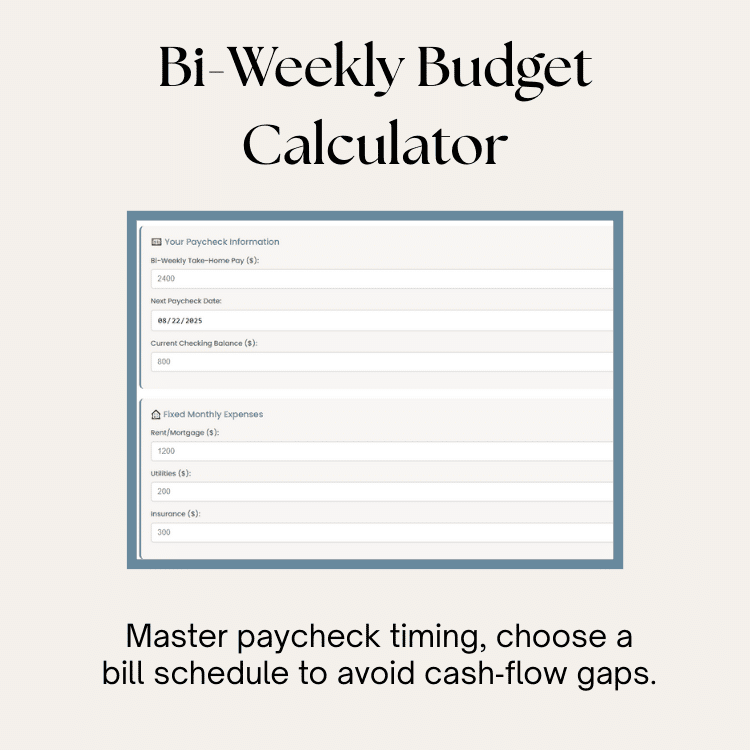
Pro Tip: For paycheck-based planning, use our Bi-weekly Budget Calculator to line up bills and income so you’re never caught short between paydays.
10. Seek Professional Financial Advice
If your situation is complex, a financial advisor can help you build a plan customized to your goals.
Conclusion: Your Money, Your Plan
Budgeting isn’t about perfection; it’s about progress. With these 10 strategies, you’ll have a roadmap for saving more, reducing stress, and making your money work for you instead of the other way around.
Want a budget that matches your paycheck schedule? Grab our Bi-Monthly Budget Calculator and start planning with confidence today.